
SUPPLY CHAIN CONSULTING FOR INDUSTRIAL COMPANIES
Your partner in accelerating supply chain transformation.
Strategy, value creation and transformation for industrial companies. Make better structural choices, improve operational performance and deliver change that lasts.
What we do
Three pillars of supply chain mastery.
Strategy
Make the structural choices that drive competitive advantage — from organization, production footprint and service networks to service levels meeting and exceeding customer expectation.
Focus areas
Governance · Service · Operations · Sourcing · Inventory · Logistics
Value Creation
Assess where the value is, and find the key levers. Implement actions for improving service, reducing cost, and optimizing working capital.
Focus areas
Supply chain performance improvement · Production efficiency · Cost reduction · Working capital optimisation · Sustainability and circularity
Transformation
Drive major transformations related to operating model, company structure or technology changes. Create deep engagement and build competence in parallel.
Focus areas
Merger synergy · Divestment operating model · Network restructuring · Digital transformation · Organisation and capability
Full service catalogueEvery service, by pillar
01 Strategy
Governance
Centralised vs distributed operating model
Decide which supply chain decisions belong at group level and which are best made close to markets and sites. Combine scale benefits with local responsiveness.
Decision rights and governance forums
Define ownership, escalation paths and meeting cadence across functions and business units. Speed up decisions and resolve trade-offs between sales, operations and finance.
Service
Service channel optimisation
Assess distributors, merchants and direct sales by customer segment and market. Build a channel mix that reaches customers at the right cost-to-serve without eroding margin or control.
Service differentiation
Design segmented service offerings around the lead times, flexibility and support each customer group values and is willing to pay for.
SLA structures
Build measurable, commercially sound service level agreements that operations can deliver. Align customer expectations with supply chain capability and reduce disputes.
Make-to-order, convert-to-order or make-to-stock
Choose the right production and fulfilment policy for each product and customer. Balance lead time, inventory and asset utilisation through the right decoupling point.
Operations
Make vs buy
Evaluate which products, components and activities to keep in-house or source externally, considering total cost, capability, risk and strategic control.
Production and converting site locations
Determine where mills, plants and converting sites should serve markets over the long term. Combine cost-to-serve modelling with capacity, raw material and customer proximity.
AI and methodology ambition
Set a realistic ambition for Lean maturity, AI and advanced analytics in operations. Prioritise a roadmap that builds capability step by step rather than chasing technology for its own sake.
Sourcing
Creating competition
Identify and develop alternative suppliers to reduce dependence on a single vendor's terms. Build credible competition on price, quality and responsiveness.
Tender strategies
Design category-specific tender processes, from simple requests for quotation to multi-round negotiations and long-term framework agreements, to secure better terms and a stronger supplier base.
Sole and single sourcing
Where sole or single sourcing is necessary or chosen, establish clear contracting, performance follow-up and risk management to keep dependencies under control.
Inventory
Service network design
Design stocking points and inventory positions to deliver the target service level at the lowest total cost, accounting for demand patterns, lead times and transport options.
SKU classification
Classify stock-keeping units by volume, variability and margin, and define a stocking policy for each class. Use the analysis to improve service, inventory turns and portfolio decisions.
Logistics
Partnerships vs spot
Decide which transport and warehousing volumes need long-term partnerships and which are better bought on the spot market. Balance capacity security with competitive cost.
Transport mode strategy
Evaluate road, rail, sea and intermodal options for your flows, weighing cost, lead time, reliability and CO₂ emissions.
Warehouse location strategy
Determine how many warehouses are needed, where they belong and whether they should be owned or outsourced. Link the network directly to the service promise and total logistics cost.
02 Value Creation
Supply chain performance improvement
Tactical planning redesign (SIOP)
Design or relaunch Sales, Inventory and Operations Planning so one agreed plan steers sales, production, procurement and finance. Align service and inventory decisions with a reliable 12–24 month outlook.
Operational planning redesign
Redesign short-term production scheduling, order promising and replenishment. Reduce disruption and firefighting while improving delivery reliability and asset utilisation.
Demand planning and forecast accuracy
Combine statistical forecasting with commercial insight in a structured demand planning process. Improve forecast accuracy to reduce stock-outs and excess inventory.
Supply chain KPI framework
Define a compact set of KPIs, targets and reporting routines linking daily operations to financial results. Keep performance improvement visible after the project ends.
Production efficiency
OEE and Lean improvement
Raise overall equipment effectiveness through loss analysis, standard work and Lean methods. Improve output from existing assets to help defer or avoid capital investment.
Cost reduction
Variable cost reduction
Identify savings in raw materials, energy, freight and other variable costs through recipe, specification and process optimisation. Quantify, prioritise and track savings to the bottom line.
Fixed cost reduction
Benchmark and reshape organisation, maintenance and overhead costs. Build a leaner structure while protecting capabilities critical to the business.
Logistics optimisation
Analyse freight, warehousing and handling costs lane by lane. Find savings through load optimisation, routing, carrier management and renegotiation.
Procurement savings programme
Run category-by-category programmes combining specification review, demand management and supplier negotiations. Validate results jointly with finance.
Working capital optimisation
Inventory reduction
Release cash tied up in raw materials, work-in-progress and finished goods through better policies, planning parameters and SKU rationalisation, without compromising customer service.
Payment terms and supplier-managed inventory
Review customer and supplier payment terms and assess consignment stock and vendor-managed inventory. Improve cash flow while keeping supplier relationships healthy.
Sustainability and circularity
Recycled fibre and material flows
Optimise the collection, sorting, quality and use of recycled materials such as paper for recycling. Lower raw material cost, secure supply and support recyclability commitments.
Supply chain emissions reduction
Map and reduce Scope 3 emissions in logistics and sourcing through mode shifts, network changes and supplier engagement. Include emissions alongside cost and service in the business case.
03 Transformation
Merger synergy
Synergy identification and valuation
Identify, quantify and validate synergies in procurement, production, logistics and inventory before and after a transaction. Support deal valuation and set clear integration targets.
Post-merger supply chain integration
Plan and lead the integration of supply chains, sites and planning processes after a merger or acquisition. Capture synergies while protecting customer service through the transition.
Divestment operating model
Carve-out and separation planning
Design the future operating model for a divested business and plan the separation of shared sites, systems, contracts and people. Prepare the unit to operate independently from day one.
Transitional service agreements (TSA)
Define the scope, pricing and exit plan for services the seller continues to provide after closing. Protect both parties and keep separation on track.
Network restructuring
Capacity consolidation and site closures
Prepare and execute capacity consolidation, site closures and production transfers. Plan customer transfers, stock build-up and ramp-up to protect service and revenue.
Digital transformation
Planning system selection and implementation
Define requirements, select and implement planning systems — including APS, ERP and SIOP tools — that fit your processes. Design the process first so technology delivers business value.
Organisation and capability
Supply chain organisation design
Design the organisation, roles and competence profiles needed for the chosen operating model. Build capability and coach teams so new ways of working stick.
Interim supply chain leadership
Provide experienced interim leadership for supply chain functions or transformation programmes during critical periods. Bring senior, hands-on capability without a long recruitment process.
Business challenges
Recognise a familiar problem?
How we work
From business case to everyday operations
Diagnose — Establish the facts
Analyse flows, costs, service levels and capabilities. Identify root causes and quantify opportunities so priorities are grounded in your business reality.
Design — Make the choices
Define the operating model, processes and network with your team. Build a business case with clear ownership, targets and a practical implementation roadmap.
Deliver — Embed the change
Support implementation, coach teams and track performance. Link operational changes to financial outcomes and establish routines that sustain improvement.
Impact
Focus on the outcomes that matter
Each engagement starts with your priorities. Agree the targets, quantify the business case, recognize the trade-offs, and link levers to service, cost, cash and capability.
Reliable service
Service ambition can range from a license to operate to a major competitive factor. Defining the right level and differentiation frame will set basis for needed cost and working capital.
Competitive cost
Approach to cost should be simultaneously both top-down based on industry benchmark, and bottom-up recognizing sourcing, efficiency and streamlining potential on operational level.
Cash released
Thorough review of SLAs, SKU inventory policies and payment terms is the foundation for cash release. Engineering of inventory concepts, factoring and supply chain financing are additional structural levers.
Lasting capability
Involvement in an engagement is a major learning opportunity for the internal team. Methodology can be applied and scaled, promoting both personal growth as well as continuous improvement culture
About
Senior expertise. Personal commitment.
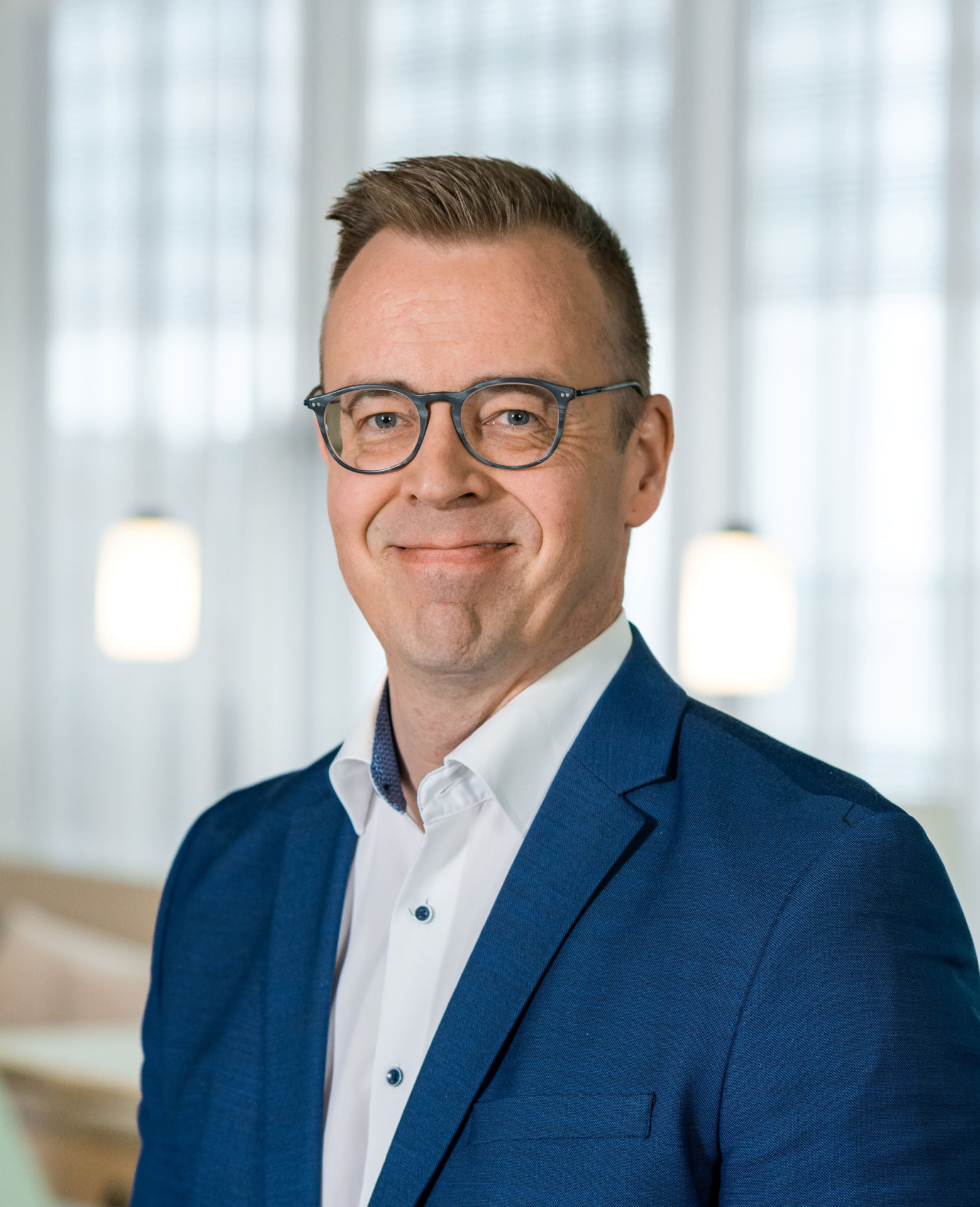
Niko Hietala
Founder & Managing Partner
Menestio brings hands-on supply chain leadership to industrial companies facing strategic choices, performance challenges and major business changes. Every engagement is led personally by Niko Hietala.
He rose to Senior Vice President, Supply Chain at Stora Enso's €4.5bn Packaging Materials Division, leading a 400-person end-to-end function across ten European countries. Earlier, he built the entire supply chain for an €800m greenfield mill in Beihai, China — from customer service and S&OP to logistics.
The work spans strategy, value creation and transformation: from governance, service and sourcing decisions to planning improvement, cost reduction, mergers and interim leadership. The emphasis is on practical choices, a clear business case and implementation alongside your team.
- 20+ years in industrial supply chain, sourcing & operations — Europe & China
- Former SVP Supply Chain, Stora Enso Packaging Materials (€4.5bn · 400 people · 10 countries)
- Led the €800m greenfield supply chain build-up in Beihai, China
- MSc (Tech), Helsinki University of Technology
- Executive education: Stockholm School of Economics, McKinsey, Aalto
Based in Finland, Menestio Oy combines a focused consultancy model with senior, hands-on support — from initial diagnosis to new ways of working.
Contact
Let's talk about your supply chain
A strategic decision, a performance gap or a major transition — tell Niko what is on your agenda and discuss where focused support could make a difference.
Book a 30-minute call →Oulu, Finland